
What to Do When Your Garage Door Won’t Close
Picture this: you’re heading out for the day, ready to leave for work, or getting home after a long afternoon. You press the garage door button, but instead of closing, the door stops, reverses, or refuses to move.
A garage door that won’t close is more than an inconvenience. It can leave your home, vehicles, tools, and belongings exposed.
For homeowners throughout Seattle and the Pacific Northwest, dependable garage door operation is especially important during the cooler, wetter months when the garage often serves as a primary entrance to the home.
The good news is that some garage door problems have simple explanations. Others require a professional technician to identify and repair the issue safely.
Here are some common reasons your garage door may not be closing properly.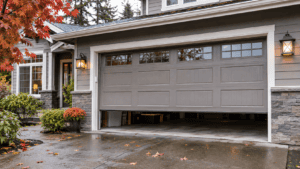
1. The Safety Sensors Are Blocked or Misaligned
One of the most common reasons a garage door won’t close is an issue with the safety sensors.
Most modern automatic garage door systems use photo-eye sensors located near the bottom of the door tracks. These sensors help prevent the door from closing when something is in its path.
If the sensors are blocked, dirty, or misaligned, the door may stop or reverse before reaching the ground.
Common sensor problems include:
- Dirt or debris covering the sensor lenses
- Storage items blocking the sensor beam
- Sensors that have been bumped out of alignment
- Loose or damaged sensor wiring
- Sensor components that are no longer functioning properly
Homeowners can safely check for visible obstructions and gently clean the sensor lenses.
If the problem continues, a professional can evaluate whether the sensors need adjustment, repair, or replacement.
2. Something Is Blocking the Garage Door
Sometimes, the problem is as simple as an object in the door’s path.
Bikes, storage bins, tools, sports equipment, and other household items can interfere with the door as it closes.
Leaves and debris may also accumulate near the garage door opening, particularly during fall in the Pacific Northwest.
Before trying the door again, check that the doorway is clear.
Avoid placing your hands near moving components or attempting to reach underneath a door that is moving.
If the door still won’t close after removing visible obstructions, there may be another issue affecting its operation.
3. The Garage Door Tracks Are Damaged
Garage door tracks help guide the door as it opens and closes.
If a track becomes bent, damaged, or misaligned, the door may struggle to move smoothly. In some cases, it may stop partway through the closing cycle.
Signs of track-related problems may include:
- Uneven door movement
- Grinding or scraping sounds
- A door that appears crooked
- Visible bends or damage to the tracks
- Rollers that appear displaced
Track damage should not be ignored.
Garage door systems are heavy, and their components operate under significant forces. Attempting to straighten tracks or reposition rollers without proper training can create additional damage or injury risks.
A garage door technician can inspect the tracks and determine the appropriate repair.
4. The Garage Door Springs or Cables May Be Damaged
Springs and cables play an important role in supporting and balancing the weight of a garage door.
When these components are damaged, the door may become uneven, difficult to move, or unable to operate correctly.
Common warning signs include:
- A loud snapping sound
- A visible gap in a torsion spring
- Loose or frayed cables
- A door that hangs unevenly
- A door that suddenly feels much heavier
If you suspect a broken spring or cable, stop operating the door and contact a professional.
Garage door springs and cables are under high tension and should never be adjusted or replaced without the appropriate tools and training.
5. The Garage Door Opener May Be Malfunctioning
Sometimes, the garage door itself is in good condition, but the opener is experiencing problems.
Garage door opener issues may involve electronic controls, safety settings, internal components, or mechanical connections.
Signs of opener trouble may include:
- The motor runs, but the door doesn’t move
- The opener stops unexpectedly
- Remote controls respond inconsistently
- The opener makes unusual noises
- The door begins closing but reverses
- The wall control works, but the remote doesn’t
If the remote isn’t working, checking its batteries may be a useful first step.
However, if the opener continues to malfunction, professional troubleshooting may be needed to determine whether repair or replacement is appropriate.
6. The Door May Be Out of Balance
A garage door should be properly balanced so its weight is supported by the spring system rather than relying entirely on the opener.
If the door becomes unbalanced, the opener may struggle to raise or lower it.
This can cause excessive wear on the system and contribute to unreliable operation.
A professional garage door technician can evaluate the door’s balance and identify any underlying spring or hardware problems.
Homeowners should not attempt to adjust spring tension themselves.
When Should You Call for Garage Door Repair?
Not every garage door issue requires a complete replacement. Many problems can be resolved through professional repair.
However, you should schedule service if:
- The door repeatedly refuses to close
- The door is crooked or uneven
- You notice damaged springs or cables
- The opener is struggling or making unusual noises
- The door has visible track damage
- The door reverses without an obvious obstruction
- The garage cannot be secured
If the garage door is stuck open or poses an immediate safety concern, prompt professional service is especially important.
Never force the door closed, bypass safety sensors, or attempt to repair high-tension components.
Reliable Garage Door Repair in Seattle
A garage door that won’t close properly can disrupt your day and leave your property vulnerable.
Whether the issue involves sensors, tracks, springs, cables, or the opener, identifying the cause is the first step toward getting the system working again.
Cressy Door & Fireplace provides garage door repair and service for homeowners throughout Seattle, Kent, Bellevue, Tacoma, and surrounding Pacific Northwest communities.
From everyday garage door problems to unexpected breakdowns, Cressy’s experienced technicians can help restore safe and reliable operation.
Having trouble with your garage door? Contact Cressy Door & Fireplace to schedule professional garage door repair.
Frequently Asked Questions
Why does my garage door start closing and then reverse?
This may happen when safety sensors detect an obstruction, become misaligned, or malfunction. Issues with the door’s movement or opener settings may also cause unexpected reversing.
Can I manually close my garage door if the opener isn’t working?
Manual operation may be possible in some circumstances, but it can be dangerous if the springs, cables, or other components are damaged. Do not disconnect the opener while the door is open or attempt to move a door that appears unstable.
Is a garage door that won’t close considered an emergency?
It may require urgent service if the door cannot be secured, presents a safety hazard, or leaves the home exposed. Cressy Door & Fireplace offers emergency garage door repair services.