
Warning Signals Homeowners and Businesses in the Pacific Northwest Should Never Ignore
Garage doors are one of the largest moving systems in any home or commercial building. Because they are used daily, wear and tear is inevitable. Yet many property owners overlook early warning signs until a small issue turns into a costly repair or a complete system failure.
In the Pacific Northwest, garage doors face additional challenges. Rain, humidity, and seasonal temperature shifts can accelerate component wear and cause problems to appear sooner than expected. Recognizing the early signs of trouble can help prevent unexpected breakdowns and keep your garage door operating safely.
Below are the most common indicators that your garage door needs professional repair, along with guidance on when it is time to schedule service.
Unusual or Increasing Noise During Operation
One of the earliest signs that a garage door needs repair is a change in sound.
Garage doors normally produce some mechanical noise, but sudden increases in sound often indicate that components are wearing out or falling out of alignment.
Common warning sounds include:
- Grinding or scraping
- Loud popping when opening or closing
- Squealing or screeching
- Rattling from loose hardware
These sounds often point to issues with rollers, hinges, tracks, or springs. Moisture exposure common in the Pacific Northwest can also cause metal components to corrode, increasing friction and noise.
Ignoring unusual sounds can lead to accelerated wear on the opener and other critical parts.
The Garage Door Moves Slowly or Unevenly
A properly functioning garage door should move smoothly and at a consistent speed. If the door hesitates, jerks, or moves unevenly, something is likely wrong with the system.
Possible causes include:
- Failing springs
- Track misalignment
- Worn rollers
- Opener motor strain
- Imbalanced door weight
In commercial environments, uneven movement can also indicate heavy usage stress or structural component fatigue.
Slow or inconsistent operation is often an early warning sign that a larger mechanical failure may occur if the problem is not addressed.
The Door Does Not Open or Close Completely
Another common issue is a garage door that refuses to fully open or close.
You may notice that the door:
- Stops several inches before closing
- Reverses direction unexpectedly
- Opens only partway
- Gets stuck during operation
These issues can result from sensor alignment problems, track obstructions, worn springs, or opener adjustments.
Because garage doors include built-in safety systems designed to prevent accidents, improper closing behavior should always be inspected by a professional.
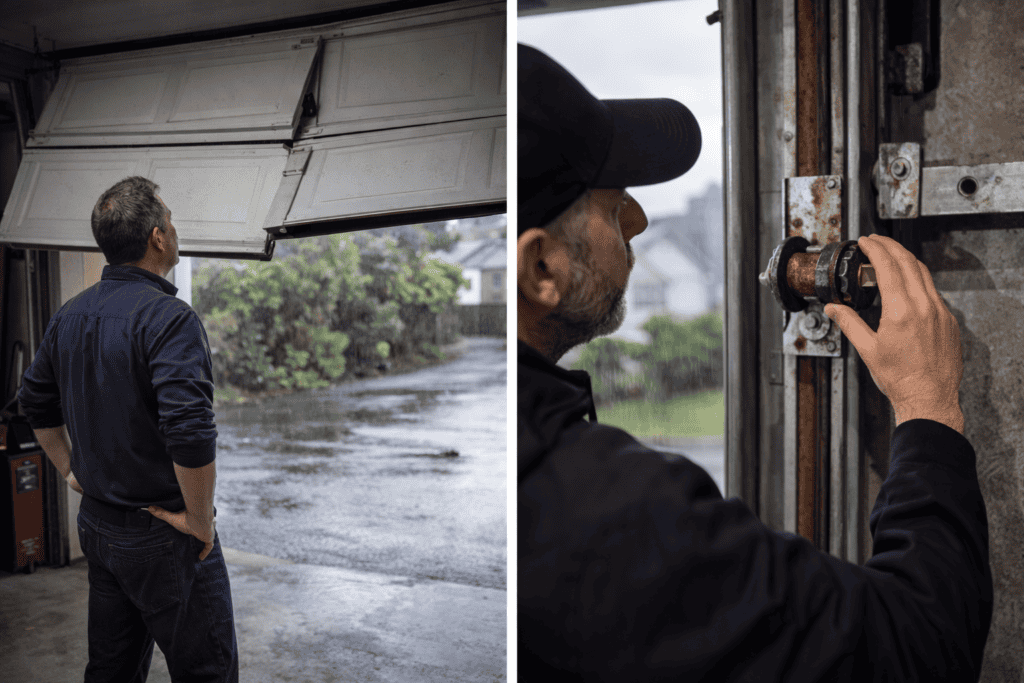
The Door Appears Crooked or Off Track
If your garage door looks uneven when moving, it may be coming off its track.
This can happen when:
- Rollers slip out of alignment
- Tracks become bent or damaged
- Cables wear unevenly
- Hardware loosens over time
An off-track garage door can become dangerous very quickly. Continuing to operate the door in this condition may cause the entire system to collapse or cause severe structural damage.
If the door appears crooked or tilted, it is best to stop using it and schedule service immediately.
The Garage Door Feels Heavy When Opening Manually
Modern garage doors rely on spring systems to offset the door’s weight. If those springs begin to fail, the door may suddenly feel much heavier than usual.
This is often a sign that:
- Torsion springs are weakening
- Extension springs are failing
- The door is out of balance
Attempting to lift a heavy garage door manually can cause injury or damage to the opener motor. Spring systems operate under high tension and should only be repaired by trained technicians.
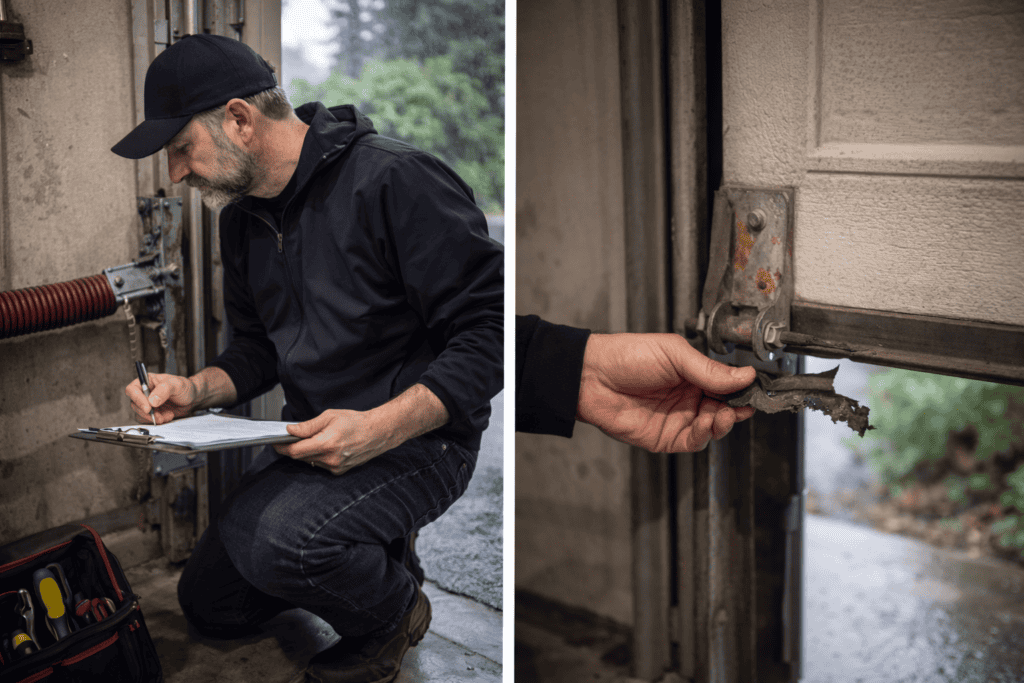
Visible Damage to Cables, Springs, or Hardware
A visual inspection can often reveal early signs of trouble.
Look for:
- Frayed cables
- Rust buildup on metal components
- Loose bolts or brackets
- Bent tracks
- Gaps in springs
In the Pacific Northwest, prolonged exposure to moisture can accelerate corrosion on springs, hinges, and rollers. Even small signs of rust can eventually lead to mechanical failure.
Routine inspections help identify these issues before they escalate.
The Garage Door Opener Struggles or Stops Mid-Cycle
If the opener motor appears to strain while operating, there may be resistance somewhere in the system.
Symptoms may include:
- The opener running but the door not moving
- The motor stopping mid-cycle
- Delayed response from remotes or wall controls
This could indicate worn components, electrical issues, or excessive door weight due to spring failure.
Continuing to operate the opener under these conditions can shorten its lifespan.
Increased Energy Bills or Drafts
Garage doors play an important role in insulating homes and commercial spaces.
If you notice:
- Cold air entering the garage
- Drafts near the door frame
- Rising heating costs
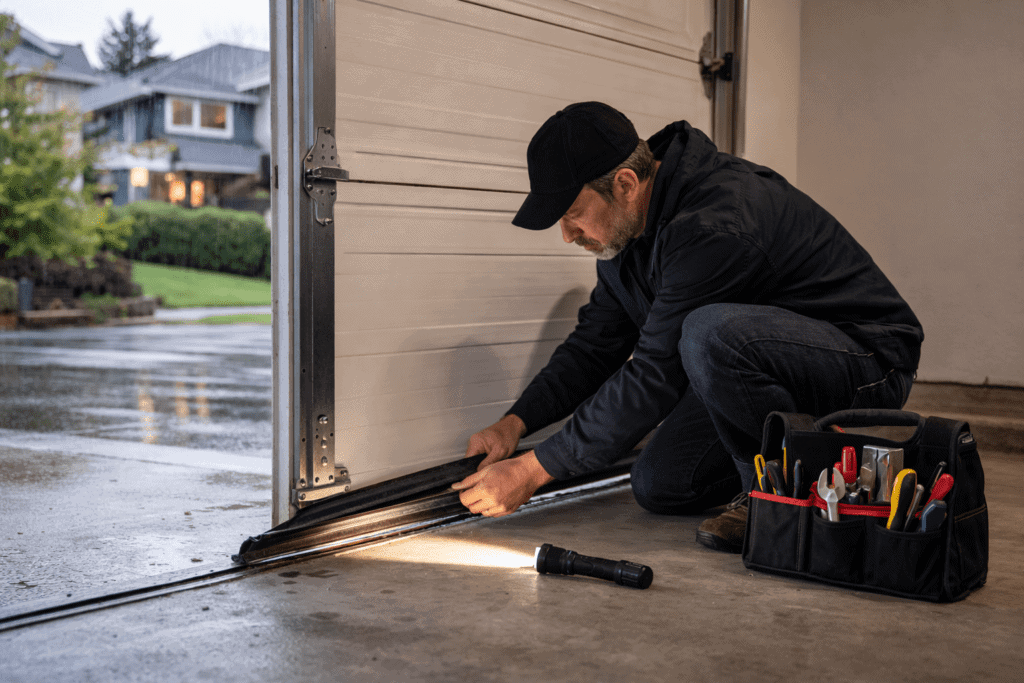
the weather seals or door panels may be damaged. Over time, worn seals can allow moisture and cold air to enter the building, particularly during the rainy and windy seasons common in the Pacific Northwest.
Frequent Breakdowns or Recurring Problems
If your garage door requires repeated repairs within a short time period, it may be a sign that underlying components are wearing out.
In some cases, replacing certain parts—or even the entire door system—may be more cost-effective than continuing temporary repairs.
A professional inspection can help determine the most reliable long-term solution.
Why Early Repairs Are Important
Addressing garage door problems early provides several benefits:
- Prevents larger mechanical failures
- Improves safety for users
- Extends the lifespan of the system
- Reduces unexpected repair costs
- Ensures reliable daily operation
Regular service and prompt repairs are especially important in the Pacific Northwest where environmental conditions can accelerate wear.
When to Schedule Professional Garage Door Service
If you notice any of the warning signs above, it is best to schedule a professional inspection.
A trained technician can safely evaluate the system, identify worn components, and recommend repairs before the issue becomes more serious.
Timely service helps ensure your garage door continues to operate safely and reliably for years to come.